learn how to see plants.
A field guide to the plants of North America that teaches you to recognize them yourself. Free, with no ads.
12,000+ plants13 regions344 familiesnearly 3,000 stories
Look. Learn. Read. Draw. Build.
Free on iPhone and Android.

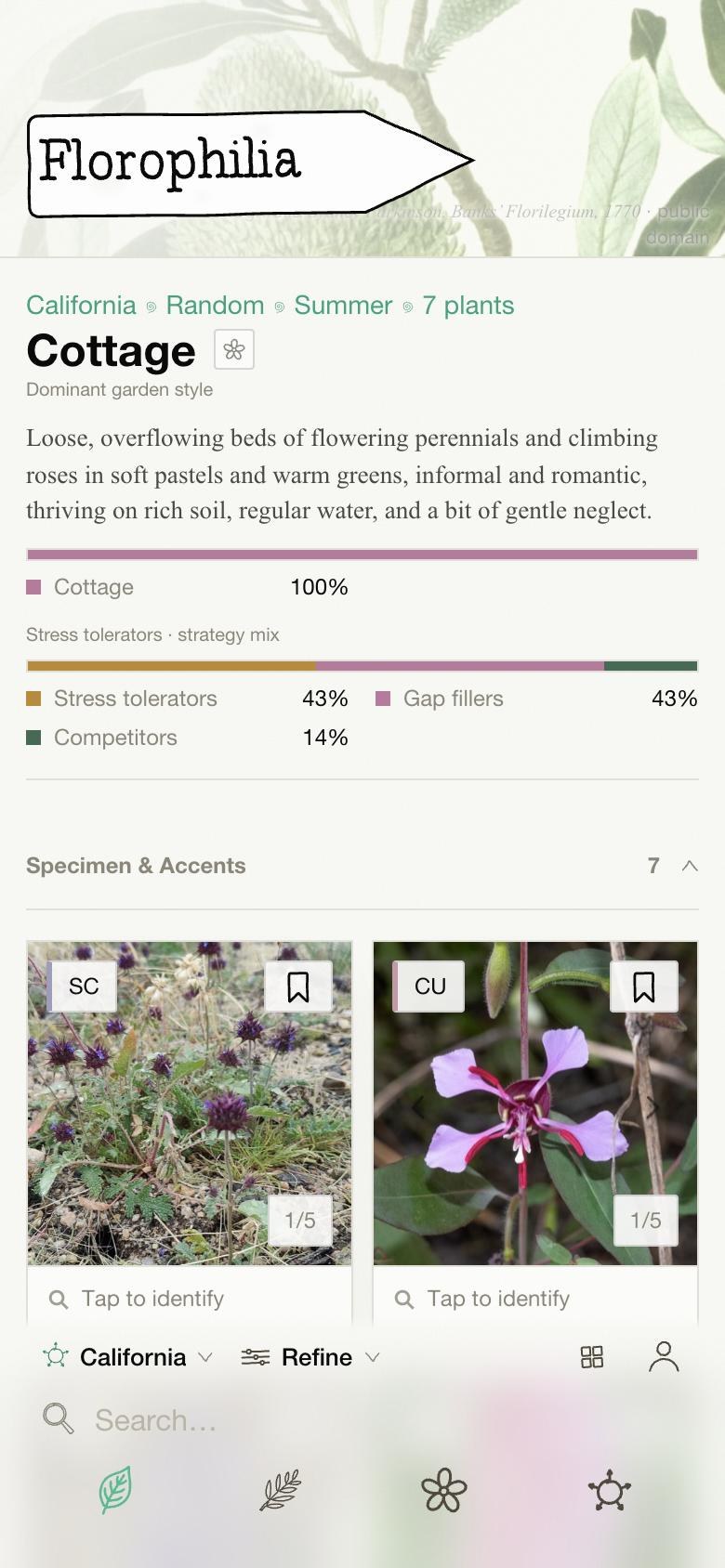
Look.
Study what's growing outside.
The app opens on a set of plants from your region, dealt as a palette. Refresh for a new set. Keep the ones you like. Tap a plant to see what it is, where it grows and what it needs.
Refine what you see to your liking. Change the region, the season or the garden style, and the set changes with it. Thirteen regions, from the redwoods to the Everglades. From kitchen gardens to habitat restoration, with the restoration picks drawn from the bodies that plant them.
Every card gives the plant's form, its needs, where it grows, what visits it, and what people have made of it. Each fact names its source.

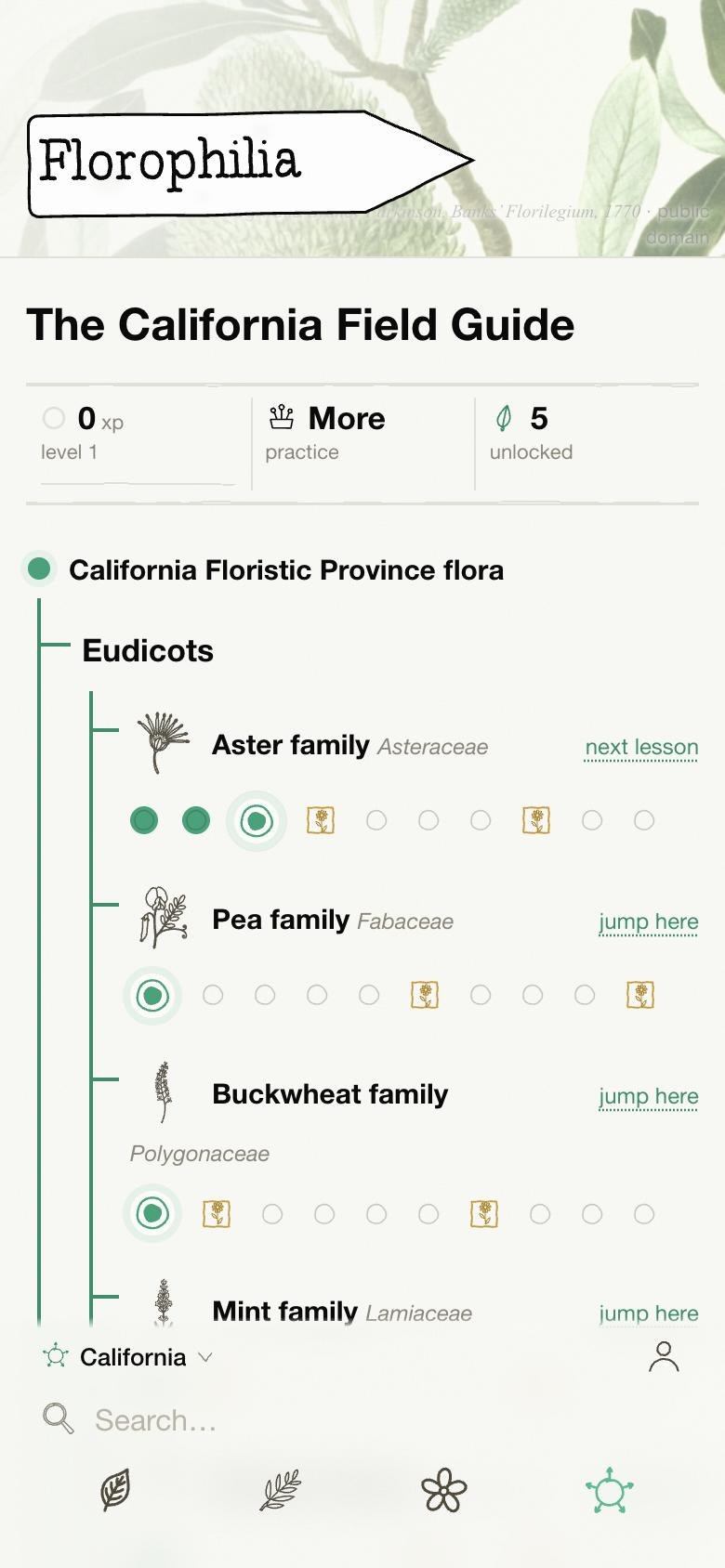
Learn.
Your region is the course.
Its plant families are the lessons, ten to twelve questions each. A drawing or a photograph leads every question. You learn taxonomy at your own pace. The most common families are introduced first, making your next hike feel like a companion course.
Each of the 344 families has its own design. Learn by looking. Start with your region, then discover how the web of 12,000+ species in the plant kingdom is connected.
Florophilia teaches the next generation of botanists to look closely and draw what they see, on the phone they already carry.AI can name a plant for you. It cannot teach you to recognize the next one. The courses are built so observation does the work: shapes before names, families before species, the Latin last. Spaced review brings each family back before you forget it. The family tree follows APG IV, the classification universities teach.Teaching a class? Write to us.


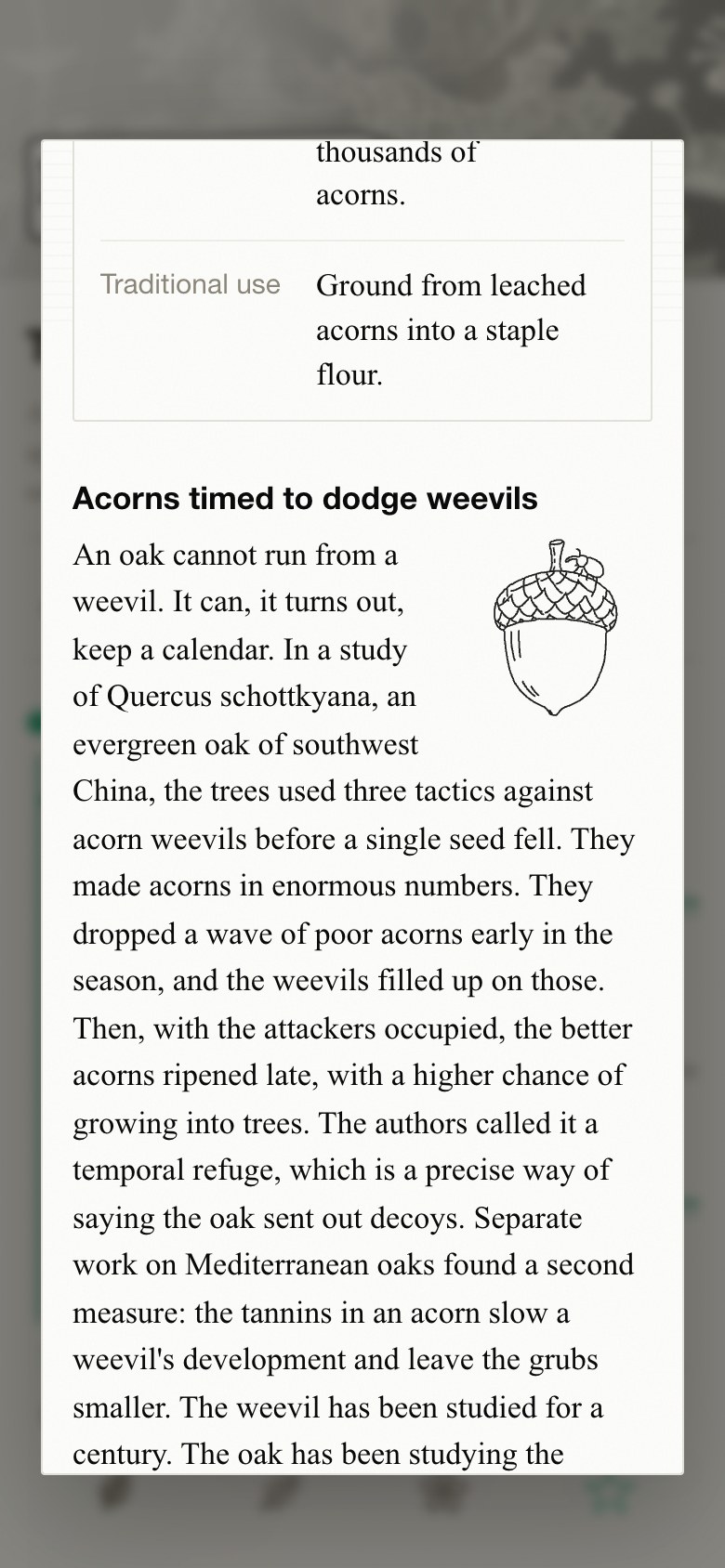
Read.
The plants that shaped the world.
Taxonomy tells you what a plant is. The lore tells you what people did with it: brewed it, painted it, built with it, named a city after it, went to war over it.
Nearly 3,000 stories, each one drawn. From plants in famous paintings to the economics of cut flowers. Each art story cites the museum's own catalog record.
How did bluegrass music get its name? What did Ophelia mean by rosemary? Go beyond botany class and learn how the plants you love shape our daily lives.


Maria Sibylla Merian
Most illustrators of her day worked from dried specimens. Merian collected caterpillars, raised them through every stage, and noted which plant each one fed on. Back in Amsterdam she turned the field sketches into large studio paintings on vellum in watercolor and bodycolor. Insect, host plant and metamorphosis sit in one picture, which made each plate an argument as much as an image.
British Museum
Pierre-Joseph Redouté
The softness in a Redouté rose is engraved, not drawn. His engravers stippled the copper with fields of tiny dots, close for shadow and wide for light, then dabbed each color onto the plate with a cloth pad before printing, and watercolor finished the petals by hand. Les Roses was colored on the copper itself, which is why it still looks fresh cut.
Hunt Institute for Botanical Documentation
Anna Atkins
In 1843 Atkins began printing Photographs of British Algae at home, with no publisher. She laid each wet frond on paper brushed with John Herschel's new cyanotype chemistry, set glass over it, and let the sun do the rest. Over ten years she recorded more than four hundred kinds, some too fine and transparent for any engraver. The seaweed printed itself.
Smithsonian Ocean
Marianne North
North would not paint a flower cut and set against nothing. She traveled alone across five continents and worked in oils, outdoors, keeping each plant where it grew. In 1879 she offered Kew her paintings if it would take a building to hold them. She paid for the gallery, and it opened in 1882 with 832 pictures hung edge to edge. It still hangs that way.
Royal Botanic Gardens, Kew
Iwasaki Tsunemasa
A minor official of the shogunate, Iwasaki grew more than two thousand plants in a garden in Edo as models for one book, the Honzo Zufu, so he could watch each one through flower, fruit and seed before he drew it. The work began in 1828 and ran past ninety volumes. He died before it was done; the full color edition appeared eighty years later.
Jonathan A. Hill Rare Books
Draw.
Draw it to know it.
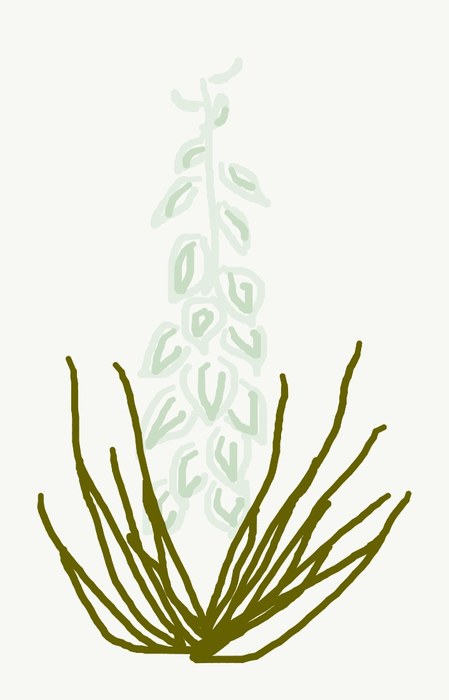
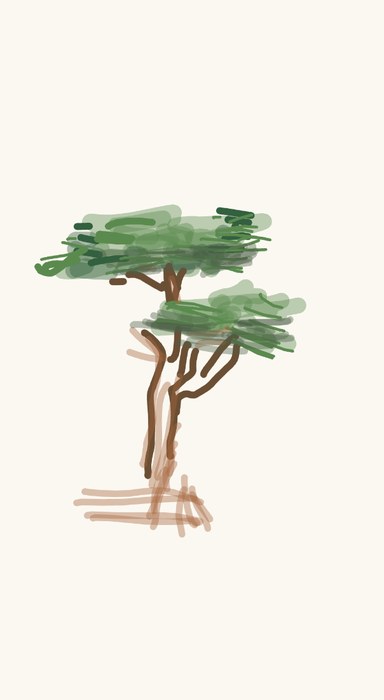
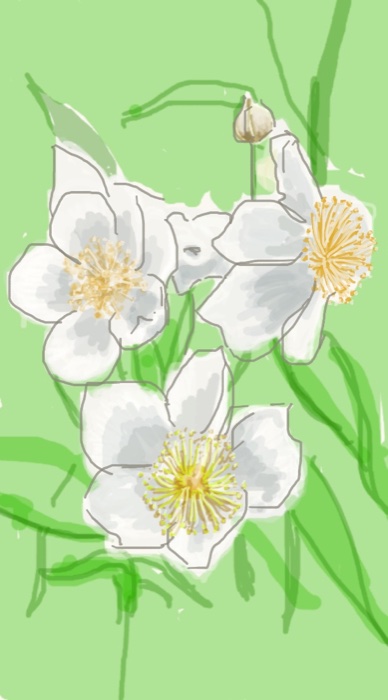
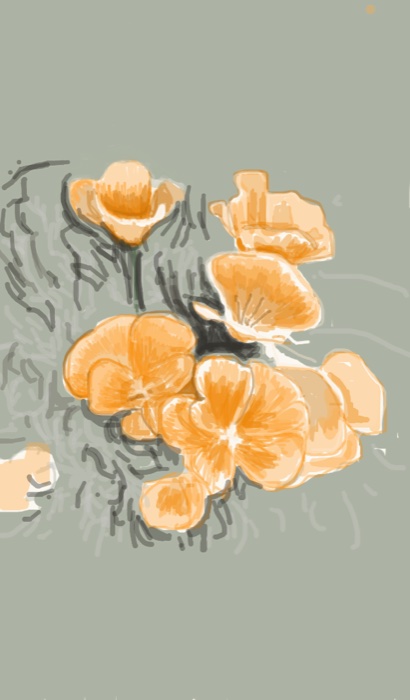
Botanists drew plants to learn them long before photography. Trace a plant from a reference image, then draw it again without one. Save the drawing, share it with a friend, or post it to the Public garden for other members to see. As your sketchbook fills, stories about the illustrators who came before you appear: Merian, Blackwell, Redouté, Ehret.
Your sketchbook is built directly into your lesson plan. Every drawing is saved to your sketchbook with the plant's name, so you can look back and see how your line work has improved. Once your hand knows a leaf, the name sticks. The lessons come with study plates of leaf veins and how leaves attach. Tracing first, then drawing from memory, is how art schools have taught the eye for more than 150 years.
Build.
For the studio: from palette to planting plan, in one place.
Curate a palette for a project in minutes and take it into the studio. Every plant leaves as a CAD block, drawn to scale and set on one ground line, ready for the plan. The same palette quickly becomes a planting schedule, a water budget, a light plan and a planting book for your client, each one worked out from the guide's own measurements. Water budgets use NOAA climate normals for the project's ZIP. The schedule exports in the MWELO format.


Every fact has a source.
Heights, ranges, bloom times and names are regularly checked against data from the USDA, Kew, the Missouri Botanical Garden, the RHS, GBIF, iNaturalist, the Lady Bird Johnson Wildflower Center and NOAA. Each plant card says where its facts came from. Every story has been checked against a cited source, and the count on the app's Transparency page updates each time the check runs.


Free to learn.
$39.99 a year to build.
Free
- Every plant, every region, every lesson
- Every story and every drawing
- No account. No ads.
Membership · $39.99 a year
- Save and share your palettes and drawings
- CAD blocks, planting schedules, water budgets, light plans and client planting books
- Keeps the servers running. Still no ads.